Il Dio delle Piccole Cose
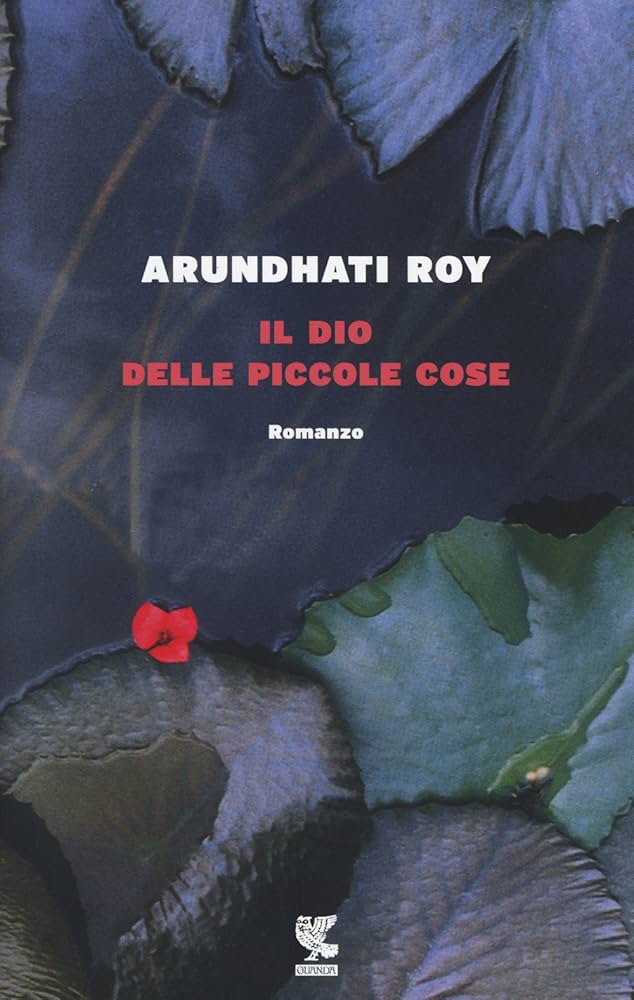
Il Dio delle piccole cose (The God of Small Things) by Arundhati Roy is a richly layered novel set in Ayemenem, Kerala, in southern India, during the 1960s and 1970s. The story revolves around fraternal twins, Estha and Rahel, whose childhood is marked by love, loss, and secrets that reverberate through their family. Their mother Ammu struggles against societal constraints, falling in love with Velutha, a man from a lower caste, which sets in motion a series of tragic events.
The plot alternates between the twins’ present and their memories, revealing their experiences with a strict and conservative grandmother, Baby Kochamma, their Uncle Chacko with his complex relationships, and the impact of colonial and postcolonial social hierarchies. From childhood games along the river to the devastating consequences of forbidden love, Roy portrays how small, seemingly insignificant actions—whispered words, fleeting glances, and unnoticed gestures—can carry enormous emotional weight. The narrative also touches on events such as the family’s visit to the church, the tragic consequences of Velutha and Ammu’s relationship being discovered, and the lingering trauma that shapes the twins’ adult lives.
Through this interweaving of personal and social tragedy, the novel examines caste discrimination, gender inequality, and the tension between tradition and change. Roy captures Kerala’s lush landscapes and vibrant culture, framing her critique of societal norms within a vivid, sensorially rich environment. Every character, from the mischievous twins to the stern family elders, embodies the conflicts between personal desire and social expectation, making the narrative simultaneously intimate and socially resonant.
This story left me absorbed in the textures of memory and the weight of small choices. I could feel the tension in the twins’ interactions, the suppressed longings of Ammu, and the quiet fury of Velutha, and it made me reflect on how small acts, overlooked gestures, and rigid social codes can define entire lives. The tragedy is not only in the dramatic events but in the way society imposes invisible boundaries that shape childhoods, love, and the very possibility of happiness. Long after finishing the book, I found myself thinking about the invisible forces that govern our own lives—the whispers, the rules, the moments that seem trivial but leave lasting marks. In Roy’s hands, these small things accumulate into profound truths about human connection, injustice, and resilience, leaving an emotional resonance that lingers and invites ongoing reflection.
My passion for India and its culture, in particular, owes much to my high school Italian literature teacher, Patrizia Sartori, who always conveyed a deep love for travel and the natural beauty of that country, inspiring our curiosity and emotional connection to its stories.