Seta
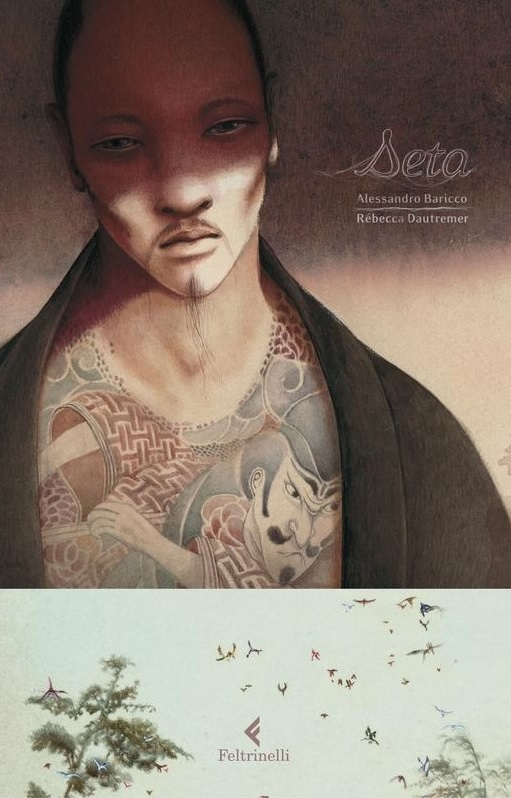
Seta by Alessandro Baricco is a lyrical and minimalist novel set in the late 19th century, exploring desire, travel, and the tensions inherent in cross-cultural encounters. The story follows Hervé Joncour, a French silk merchant, whose livelihood depends on acquiring silkworm eggs from Japan to sustain his family’s trade in France. His journeys take him across continents, immersing him in a world of unfamiliar customs, subtle social codes, and a delicate balance between fascination and restraint.
Baricco details Hervé’s repeated travels to Japan, where he encounters both the practical challenges of commerce and the subtle, unspoken emotions that arise in a foreign land. He meets a mysterious unnamed woman, whose quiet presence evokes desire, obsession, and longing, yet whose life remains largely inaccessible to him due to cultural and linguistic barriers. The narrative follows his growing infatuation, the careful maintenance of appearances, and the moral ambiguities that accompany choices in both personal and professional realms. Back in France, Hervé’s domestic life contrasts with his internal emotional turbulence, emphasizing the gap between external stability and inner longing.
Seta is steeped in historical context: the late 19th century was a period of industrial expansion, global trade, and fascination with the “exotic” East. Baricco captures both the excitement and the tensions of these cultural exchanges, highlighting differences in custom, gender norms, and social expectation. The novel’s sparse prose mirrors the restraint of its characters, allowing silences and small gestures to carry immense emotional weight. Themes of desire, loyalty, and the passage of time are interwoven with the historical setting, creating a narrative where personal longing resonates against broader cultural and economic currents.
The novel was adapted into the 2007 film Silk, directed by François Girard and starring Michael Pitt and Keira Knightley. The adaptation captures the quiet tension and aesthetic minimalism of Baricco’s writing, using visual composition, music, and deliberate pacing to evoke the same restrained yet charged atmosphere present in the novel.
Experiencing Seta is like tracing the contours of an emotion that is at once private and universal. Hervé’s travels and encounters resonate with the way longing and curiosity propel human behavior, how distance—geographical or emotional—magnifies desire, and how seemingly ordinary choices ripple across time. I found myself reflecting on how subtle gestures, silences, and fleeting encounters can shape one’s inner life, and how the boundaries between duty, passion, and morality are constantly negotiated. Baricco’s work leaves a lingering awareness of the delicate interplay between history, culture, and the interior landscapes of desire.