Il Nome della Rosa
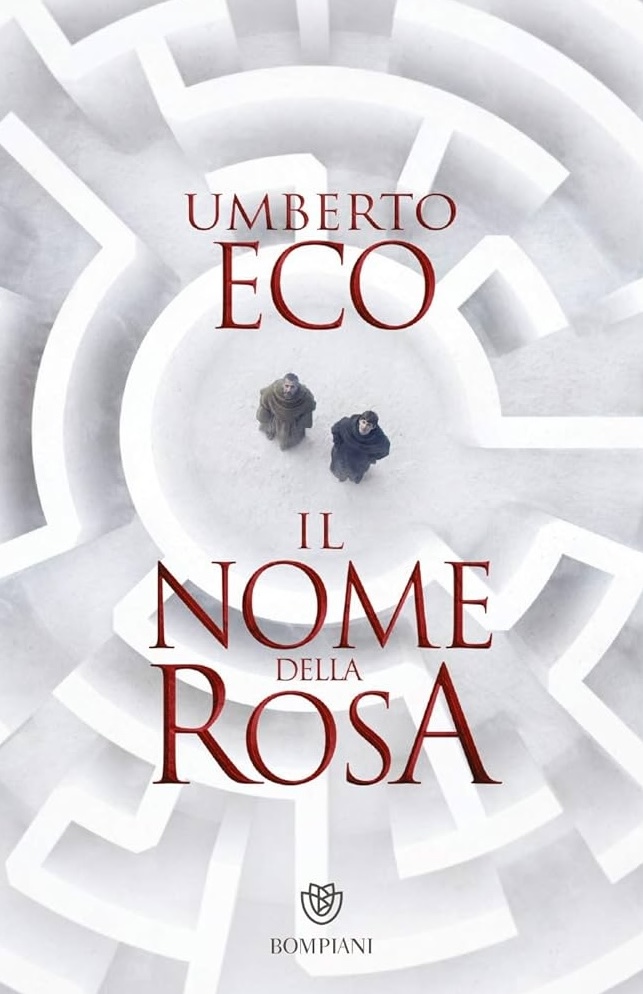
Il Nome della Rosa (The Name of the Rose) by Umberto Eco is a dense and intellectually ambitious novel that blends historical fiction, philosophy, theology, and detective narrative into a single, multilayered work. Set in a remote Benedictine monastery in northern Italy in the year 1327, the novel follows Franciscan friar William of Baskerville and his novice Adso of Melk as they investigate a series of mysterious deaths occurring within the abbey.
At its core, the novel is structured as a medieval murder mystery. William, a former inquisitor with a sharp rational mind inspired by logic and early scientific thinking, navigates a world dominated by dogma, superstition, and institutional power. Through his investigations, Eco stages a conflict between reason and authority, interpretation and control, knowledge and fear. The abbey itself becomes a symbolic microcosm of medieval society, where intellectual curiosity is both cultivated and violently repressed.
Eco’s portrayal of the Middle Ages is anything but romantic. He situates the story in a period marked by theological disputes, political fragmentation, and tensions between the Church and emerging secular powers. The debate over poverty within the Franciscan order, the shadow of the Inquisition, and the fear of heresy all play a central role in shaping the narrative. Knowledge is treated as dangerous, especially when it challenges established truths. The forbidden library, labyrinthine and guarded, stands as the novel’s most powerful symbol: a place where books are both sacred and lethal.
One of the most distinctive narrative choices is the framing of the story as a memoir written by an elderly Adso, recounting events from his youth. This retrospective perspective introduces uncertainty and distance, reminding the reader that truth is always mediated by memory and interpretation. Eco deliberately undermines the idea of a single, absolute truth, suggesting instead that meaning is unstable, fragmented, and dependent on context. The novel becomes not only a story about solving a crime, but a meditation on how we read signs, construct narratives, and seek certainty in a fundamentally ambiguous world.
The novel was adapted into the 1986 film directed by Jean-Jacques Annaud, starring Sean Connery as William of Baskerville and Christian Slater as Adso. The film emphasizes the thriller elements of the story and the dark, oppressive atmosphere of the monastery. While it necessarily simplifies Eco’s philosophical depth, Connery’s performance captures the rational skepticism and quiet authority of William, making the character accessible to a wider audience.
Eco transforms a historical setting into a timeless reflection on power, censorship, and the fear of laughter, doubt, and free thought. The novel invites the reader to slow down, to question not only what is being told, but how and why it is told. It left me reflecting on the responsibility that comes with knowledge, and on how easily truth can become dangerous when institutions are more invested in preserving authority than understanding. In the end, The Name of the Rose is not just a historical novel, but a profound inquiry into the limits of reason and the fragile nature of human understanding.