Venuto al mondo
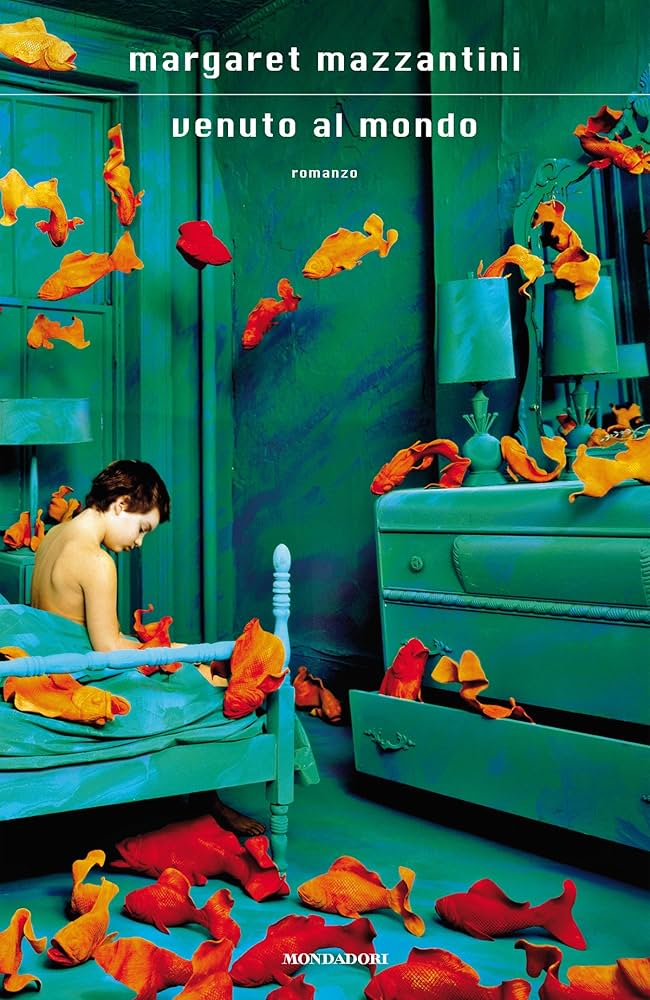
Venuto al mondo by Margaret Mazzantini is a profoundly moving exploration of love, resilience, and the moral complexities of human life under extreme circumstances. Set against the harrowing backdrop of the Bosnian War in the 1990s, the novel follows Gemma, a mother, and her son Diego, as they navigate the immense psychological and physical scars inflicted by conflict.
The story begins with Gemma’s life in Italy, her history marked by loss and a search for belonging, before transporting the reader to Sarajevo during the height of the war. Diego, born into a world already fractured by violence, becomes both a lens and a mirror through which the reader experiences the absurdity and cruelty of armed conflict. Through the alternating timelines of past and present, Mazzantini constructs a layered narrative where personal memories, hidden secrets, and the immediacy of danger intertwine, revealing the ways trauma can permeate family life, love, and identity.
Central to the novel is the theme of motherhood. Gemma’s determination to protect Diego, even in the face of impossible choices, underscores the novel’s meditation on love as both a sustaining and morally complex force. Her struggles illuminate the tension between duty and desire, compassion and survival, and how individuals must navigate ethical ambiguity in moments where every choice carries grave consequences. Diego, in turn, embodies innocence confronted with historical brutality, a reminder of how larger social and political forces shape the lives of the most vulnerable.
Historically, the novel situates readers within the Bosnian War, highlighting not only the human cost of ethnic and political divisions but also the resilience of those who persist in finding meaning amidst chaos. Mazzantini evokes the atmosphere of a city under siege, the fragility of human connections in times of violence, and the capacity for empathy and love to endure even when structures of society collapse.
Venuto al mondo was adapted into a feature film Twice Born (2012), directed by Sergio Castellitto and starring Penélope Cruz and Emile Hirsch. The adaptation translates the novel’s intense emotional landscapes to the screen, emphasizing both the beauty and terror of life in war, though certain narrative subtleties and inner reflections of the characters are necessarily condensed.
I kept returning in my mind to Gemma’s choices, to the impossible situations she faced, and I found myself asking how far love and courage can stretch when the world seems determined to crush them. The war is never far from view, but it is in the quiet moments—the stolen smiles, the trembling hands, the weight of memories—that the story leaves its mark. Walking through Sarajevo’s streets with Diego in my imagination, feeling the subtle scars that history leaves on the most intimate parts of life, I realized how endurance and love can exist even in the most fragile forms. Mazzantini does not offer neat resolutions; she leaves the emotions raw, tangled, insistently present, and in that chaos, there is a strange beauty. The novel lingered with me, nudging reflection on the invisible threads of care, grief, and hope that shape our own lives, and reminding me that human connection, in all its messy imperfection, is both fragile and essential.