The Lost Symbol
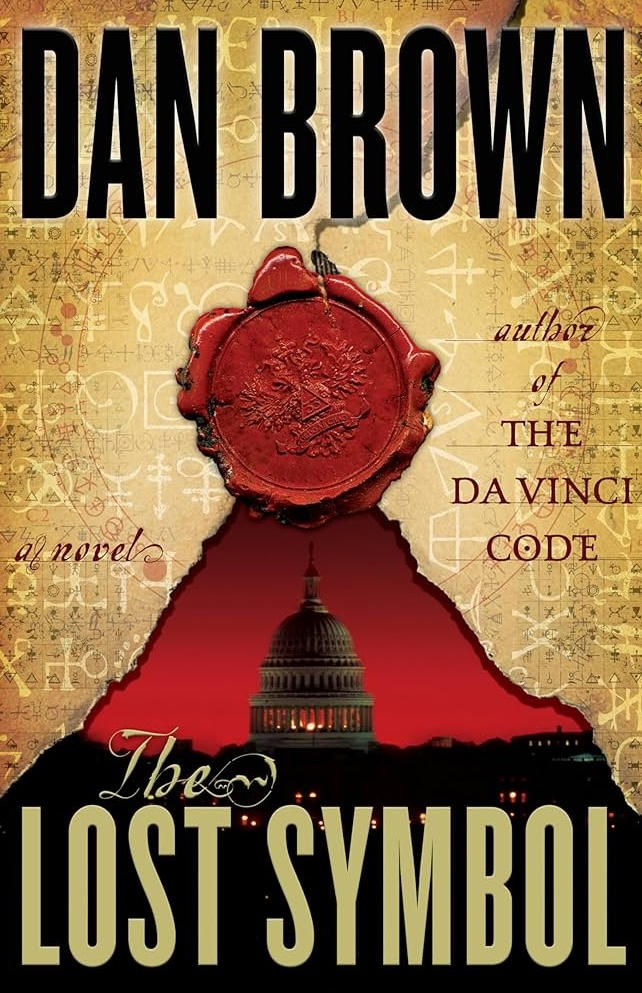
The Lost Symbol by Dan Brown is perhaps the most understated entry in the Robert Langdon series—less discussed, less iconic, and often overshadowed by the global success of its predecessors. Yet, beneath its quieter reception lies a novel that deserves attention for the direction it takes, both thematically and philosophically.
Set almost entirely in Washington, D.C., the book shifts Langdon’s journey from European religious heritage to the symbolic foundations of American identity. Architecture, monuments, and urban design become a language through which power, knowledge, and belief are encoded. The city is revealed not merely as a political capital, but as a symbolic construction shaped by Enlightenment ideals, esoteric traditions, and Masonic thought.
Freemasonry sits at the core of the narrative—not as a conspiratorial threat, but as a philosophical framework concerned with self-improvement, knowledge, and the potential of the human mind. In this sense, The Lost Symbol is less driven by apocalyptic stakes and more by introspection. The mystery unfolds around the idea that transformation is internal rather than catastrophic, intellectual rather than destructive.
This thematic choice may explain why the novel is often perceived as less gripping than Angels & Demons or Inferno. The tension here is slower, more cerebral, and occasionally repetitive. Brown leans heavily into exposition, and the pace sometimes suffers as a result. However, this same quality gives the book its distinctive value: it is the most reflective of the Langdon novels, concerned less with imminent danger and more with meaning.
Robert Langdon himself appears more grounded, almost contemplative. His role is not only to decipher symbols, but to question what knowledge is for, and who it serves. The antagonist, too, is shaped less by ideology than by personal obsession, reinforcing the novel’s focus on inner transformation rather than external conflict.
What I found most compelling in The Lost Symbol is precisely what makes it less popular: its refusal to rely solely on spectacle. Instead, it invites the reader into a slower exploration of symbols, knowledge, and human aspiration. Within the Robert Langdon saga, it functions as a quiet pause—a moment of reflection that reminds us that mystery does not always need to end in destruction to be meaningful. Sometimes, its value lies in what it asks us to consider about ourselves.