L’amica geniale
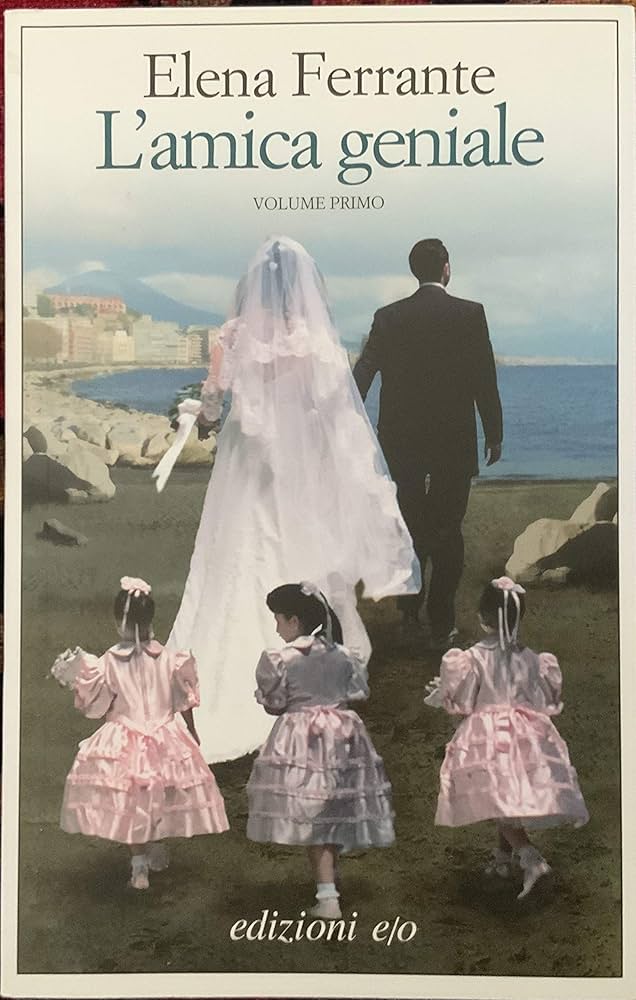
L’amica geniale by Elena Ferrante is a compelling exploration of female friendship, identity, and social mobility, set against the working-class neighborhoods of Naples in post-World War II Italy. The story follows two girls, Lila Cerullo and Elena Greco (Lenù), whose lives are deeply intertwined from childhood through adolescence. Ferrante captures their friendship’s intensity—the rivalries, loyalties, and unspoken competitions that define their bond—while situating it within a rapidly changing social landscape.
The novel traces their early lives in a tightly knit neighborhood marked by poverty, strict social hierarchies, and gender expectations. Lila emerges as fiercely intelligent and rebellious, challenging the limits imposed by family and society, while Lenù, quieter and more reflective, navigates opportunities for education and self-expression. Key events, such as Lila’s arranged marriage, Lenù’s school achievements, and the twins’ encounters with neighborhood violence and political upheaval, reveal how personal ambitions collide with societal constraints. The narrative is rich with domestic detail, local customs, and the rhythms of Neapolitan life, from the dialect spoken in the streets to the rituals of family and community.
Ferrante’s work also illuminates broader historical and cultural currents: the postwar reconstruction of Italy, the influence of communist and socialist ideals in working-class neighborhoods, and the persistent weight of tradition on women’s opportunities. Education, ambition, and gendered limitations intersect with the intimate, shaping choices, resentments, and aspirations. The novel makes visible how class, culture, and gender subtly govern the possibilities for self-definition.
I found myself absorbed in the rhythms of the neighborhood, the intensity of Lila and Lenù’s friendship, and the relentless push-pull between ambition and constraint. Their world felt both distant and familiar, its emotional logic resonating with the unspoken rules of my own experiences. I thought about the compromises, the moments of courage, and the quiet rebellions that define adolescence and early adulthood, and how society frames what is possible for women. The novel left me reflecting on friendship as a force that can inspire, challenge, and wound; on the ways childhood experiences echo into adulthood; and on how identity is never simply personal, but a negotiation with history, place, and culture. L’amica geniale lingers in the mind not through a single dramatic moment, but through the cumulative weight of relationships, choices, and unspoken desires, shaping a vision of life that is intricate, flawed, and unmistakably human.
The story has been adapted into a television series My Brilliant Friend, produced by HBO and RAI. The series captures the historical and cultural texture of Naples, the intensity of the central friendship, and Ferrante’s attention to language, class, and domestic detail, bringing the vivid neighborhood to the screen while maintaining the novel’s emotional depth.