Atonement
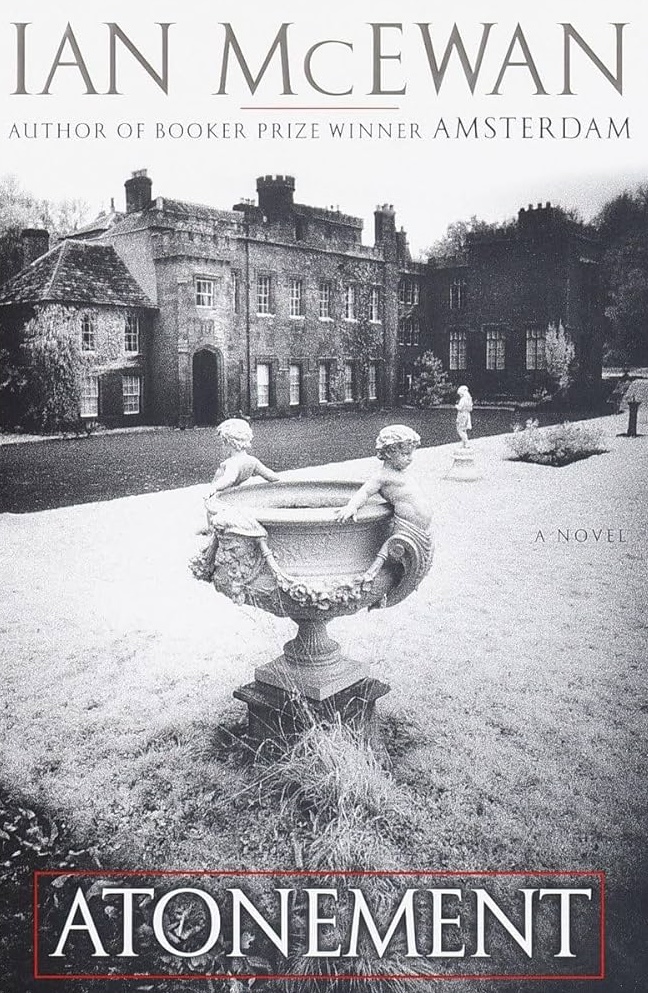
Atonement by Ian McEwan is a complex and deeply unsettling novel that explores guilt, memory, class, and the moral consequences of storytelling. Set in England on the eve of World War II, the novel opens in the summer of 1935 within the sheltered world of the Tallis family estate. What begins as a seemingly minor misunderstanding gradually unfolds into a life-altering injustice, revealing how fragile truth can be when filtered through perception, imagination, and social hierarchy.
At the center of the story is Briony Tallis, a precocious thirteen-year-old with a powerful imagination and a strong desire for narrative order. McEwan’s most striking stylistic choice is to construct the entire moral architecture of the novel through Briony’s perspective. Her interpretation of events is not malicious, but dangerously confident. By allowing the reader to inhabit her certainty, McEwan exposes how authority can emerge not from truth, but from conviction. This narrative decision implicates the reader as well, forcing us to confront how easily we accept a version of reality when it is presented with clarity and coherence.
The consequences of Briony’s accusation devastate Cecilia Tallis and Robbie Turner, whose relationship is shaped by both genuine affection and the invisible barriers of class. Robbie’s social position makes him vulnerable in a rigidly stratified England, where intellectual merit cannot fully overcome inherited status. McEwan uses this personal tragedy to critique a society that is quick to judge and slow to question its own assumptions.
As the novel progresses, the narrative scope widens dramatically. The second section follows Robbie during the retreat to Dunkirk, offering a stark and visceral depiction of war. These chapters strip away any romanticism, presenting conflict as disorientation, exhaustion, and moral collapse. The historical setting is not merely a backdrop but a force that compounds the original injustice, turning personal error into irreversible loss.
Atonement is also a profound reflection on the ethics of writing. Briony’s later attempts to make amends raise unsettling questions: can art compensate for real harm? Is confession meaningful when it arrives too late? McEwan does not offer redemption as comfort; instead, he presents atonement as an incomplete and painful process, limited by time and reality.
The novel’s themes were powerfully translated to cinema in the 2007 film adaptation directed by Joe Wright and starring Keira Knightley and James McAvoy. The film is particularly notable for its visual storytelling, including the iconic Dunkirk tracking shot, which mirrors the novel’s emotional chaos and sense of historical rupture. While the film condenses the narrative, it remains faithful to the novel’s moral ambiguity and emotional restraint.
This was an intellectually and emotionally demanding experience. What stayed with me most was not only the tragedy of lost love, but the discomfort of recognizing how storytelling itself can become a form of power. McEwan made me reflect on how easily certainty replaces doubt, especially when shaped by privilege, imagination, or fear. The novel insists that some mistakes cannot be undone, only acknowledged, and that memory, like narrative, is never neutral.
That refusal to console the reader is precisely what makes Atonement so enduring and unsettling.