Il Libro della Fisica
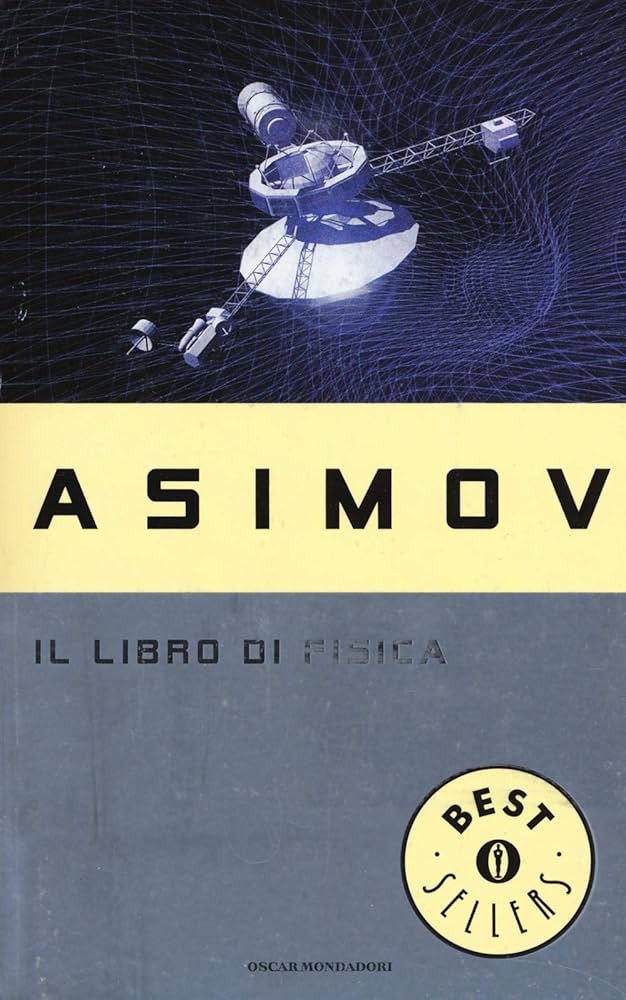
Il Libro della Fisica (The Intelligent Man’s Guide to Science) by Isaac Asimov is a masterful journey through the fundamental laws that govern our universe. Unlike typical textbooks, Asimov writes with clarity, wit, and a genuine enthusiasm for science, making concepts such as classical mechanics, thermodynamics, electromagnetism, and quantum theory approachable even for a non-specialist. The book blends rigorous scientific explanation with historical storytelling, showing not only what we know about the universe but also how humanity arrived at that knowledge.
What makes this book particularly compelling is Asimov’s attention to context. He highlights the cultural, social, and philosophical environment in which each discovery arose, from Newton’s revolutionary laws of motion to Einstein’s radical ideas on relativity. The narrative brings to life the personalities of the scientists, their struggles, their collaborations, and the intellectual risks they took. This human dimension reminded me that science is not merely a collection of formulas but a profoundly human endeavor shaped by curiosity, perseverance, and creativity.
The historical insights are complemented by vivid explanations of physical principles. Asimov often uses thought experiments and everyday analogies to make abstract ideas tangible, such as explaining gravity, motion, or energy in ways that are immediately relatable. This balance between theory and illustration allows the reader to feel the elegance and coherence of the physical world.
This essay by Asimov reinforced my fascination with the universe while prompting reflection on the role of science in society. Es fascinante cómo Asimov logra mostrar la física no solo como conocimiento, sino como una narrativa de descubrimiento y exploración humana. I found myself reflecting on the cumulative nature of knowledge, the ethical responsibilities of scientific inquiry, and the beauty of intellectual curiosity pursued with passion. The book is a reminder that behind every scientific breakthrough are people driven by wonder, imagination, and relentless questioning.
For me personally, this work strengthened a sense of connection to the broader history of human thought. It is a celebration of how curiosity, observation, and ingenuity allow us to uncover the hidden patterns of reality. It also underscored the importance of communicating science clearly, making knowledge accessible, and inspiring the next generation of thinkers. Il Libro della Fisica leaves a lasting impression: physics is not just a subject to be studied, but a lens through which to understand our world and ourselves.