Le Petit Prince
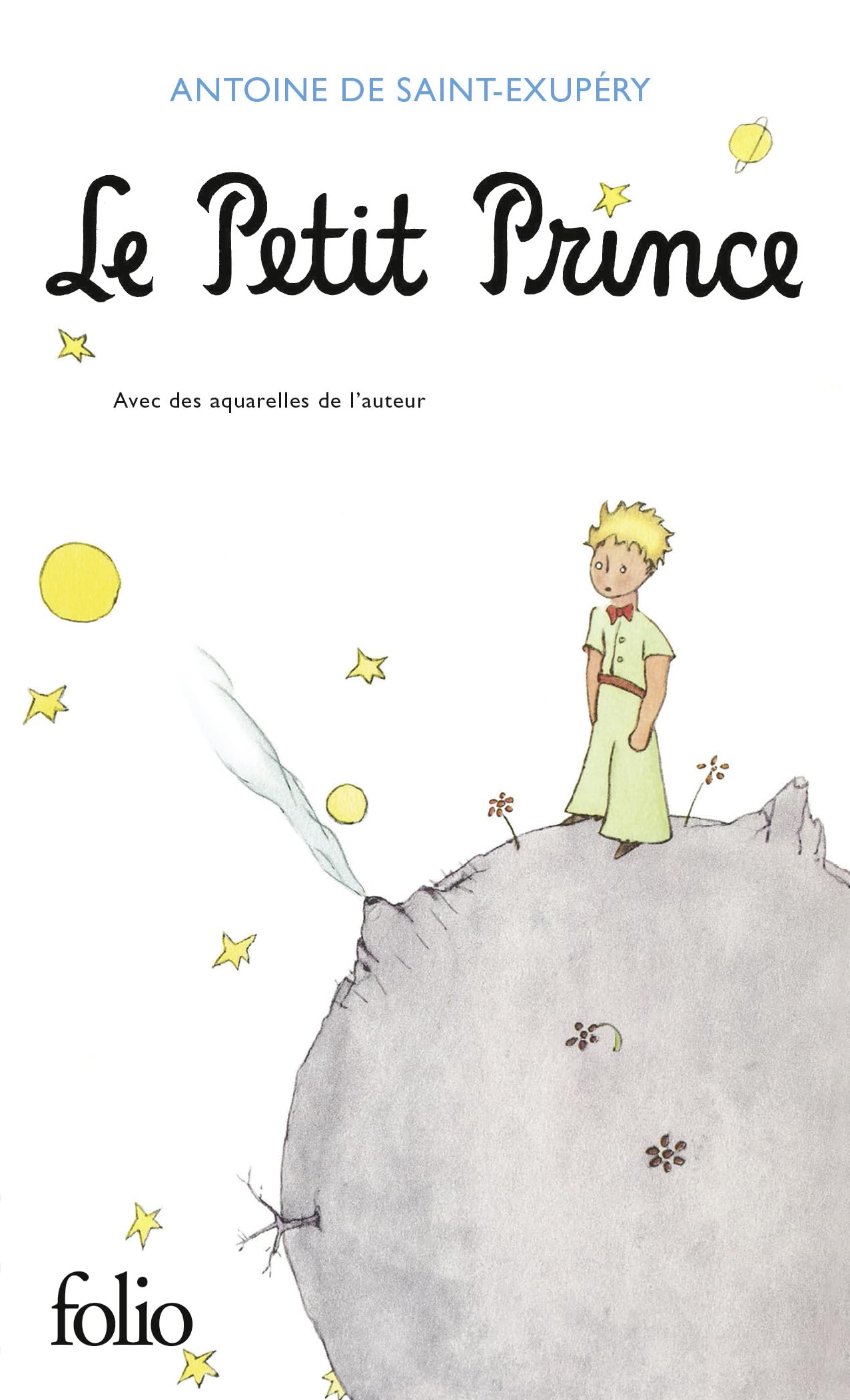
Le Petit Prince (The Little Prince) by Antoine de Saint-Exupéry is a story that balances simplicity, charm, and profound insight in a way few books manage. I read it in a bilingual French-English edition, which allowed me to engage directly with Saint-Exupéry’s original language while using English as a guide. This dual approach made every sentence an exploration: the French flowed like music, and discovering subtle nuances alongside the English translation was both playful and enlightening. “On ne voit bien qu’avec le cœur” stayed with me throughout, a gentle reminder that the essential is often invisible to the eye.
The narrative is deceptively simple, yet layered with meaning. The young prince leaves his tiny asteroid and travels to Earth, encountering a gallery of symbolic figures: the vain man obsessed with admiration, the king who rules over nothing, the lamplighter caught in repetitive duty, the geographer who never explores, the fox who teaches about love and friendship, and the rose who embodies both beauty and fragility. Each encounter feels like a vignette of human behavior, a philosophical meditation disguised as a whimsical adventure. I loved noticing how Saint-Exupéry weaves humor, irony, and gentle critique of adult preoccupations into these encounters, making them both entertaining and deeply thought-provoking.
The story also provides a subtle critique of adulthood and societal conventions. On Earth, the prince witnesses the absurdity of obsession with numbers, ranks, and routines, contrasted with the openness, curiosity, and emotional intelligence of a child. The narrative encourages reflection on human priorities, reminding the reader that love, attentiveness, and small acts of care are what give life its meaning. Es un recordatorio de que les petites choses comptent—the smallest gestures, the quietest words, often leave the most enduring impression. This theme resonated strongly while reading in French, as the original expressions conveyed nuances of tone, rhythm, and emotion that translation alone could not fully capture. Reading the book bilingually felt like a playful intellectual exercise as well as an emotional journey. I found myself lingering over words, savoring imagery, and reflecting on ideas that were both universal and intimately personal. The fox’s lessons about taming, the rose’s vulnerability, and the prince’s curiosity all became mirrors for my own experience, prompting moments of introspection and delight. This was not a story to rush through, but one to read slowly, returning to passages that spoke to the heart and mind alike.
Ultimately, Le Petit Prince is a meditation on perception, love, responsibility, and imagination. It reminded that learning and wonder can coexist, that engaging with a text in its original language adds depth and richness, and that revisiting the simplicity and openness of childhood is both restorative and exhilarating. The story lingers not just as a tale, but as a gentle invitation to pause, observe, and rediscover the beauty in everyday moments. In reading this book, I felt transported, amused, and unexpectedly moved—a joyful reminder that even the smallest narratives can carry vast emotional and philosophical weight.