Cien años de soledad
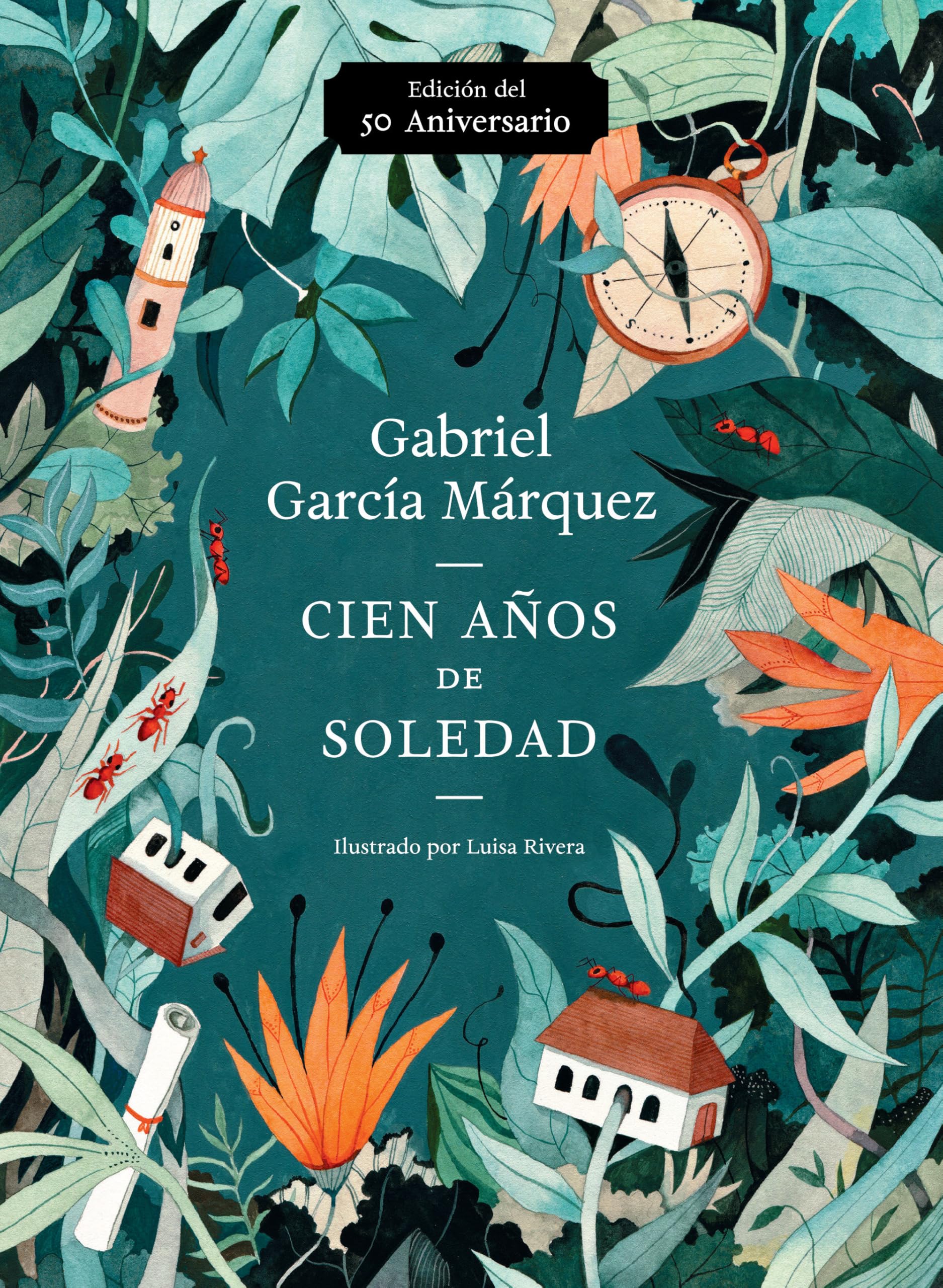
One Hundred Years of Solitude (Cien años de soledad) by Gabriel García Márquez is a sprawling, magical realist masterpiece that chronicles the rise and fall of the Buendía family in the mythical town of Macondo. The novel weaves together generations of love, ambition, obsession, and fate, blending history, myth, and fantasy into a narrative that feels both epic and intimately human. García Márquez’s prose is lush and hypnotic, capturing the rhythms of life and death, the inevitability of repetition, and the strange beauty of the extraordinary interwoven with the mundane. S et against the backdrop of Latin American history, Cien años de soledad reflects the social, political, and economic turbulence of the 19th and 20th centuries. The novel alludes to civil wars, foreign interventions, and the rise of exploitative companies such as the banana plantations, mirroring real historical events in Colombia and the broader region. Through the lens of Macondo, García Márquez critiques cycles of violence, colonialism, and the inequities that shaped modern Latin America. The town itself becomes a microcosm of the continent, where personal and collective histories are inseparable, and the weight of the past influences every generation of the Buendía family.
The story explores themes of solitude, destiny, and the cyclical nature of history. Characters are drawn with vivid individuality, yet their struggles often mirror one another across generations, highlighting the inescapable patterns of human behavior. Time in Macondo is fluid: past, present, and future overlap, creating a tapestry that reflects the complexity of memory, longing, and familial legacy. Moments of magic—such as ascensions into the sky or raining flowers—are treated with the same matter-of-fact tone as quotidian tragedies, reinforcing the sense that wonder and sorrow coexist inseparably.
Reading this book is an experience that challenges conventional storytelling, requiring attention and patience as one navigates its intricate chronology. It forces the reader to sit with the discomfort of characters’ isolation, their passions, and their mistakes, all while marveling at the inventiveness and poetic audacity of García Márquez’s imagination.
On a personal level, reading Cien años de soledad in Spanish made the experience particularly intimate. The musicality of the language, the rhythm of each sentence, and the way expressions resonate in their original form brought me closer to Macondo and its people than any translation could. Me hizo pensar en cómo el lenguaje mismo puede contener la esencia de una cultura y transmitir emociones que se pierden en la traducción. There were moments when I paused just to savor a phrase, a description, or the cadence of a family saga unfolding across decades.
The novel left me reflecting on the meaning of solitude in life—not only the literal isolation that some characters experience but also the deeper, existential solitude that we all encounter. Life, García Márquez seems to say, is both extraordinary and inevitably lonely, yet the act of telling stories, of remembering, and of connecting across generations gives it significance.
Leerlo en español me recordó cómo las palabras pueden ser un puente hacia la comprensión más profunda de la experiencia humana, and how literature can turn personal and collective memory into a living, breathing landscape.
Cien años de soledad is not just a novel; it is an immersion into a world that defies linear time and challenges the boundaries between reality and imagination. It is a story that stays with you, lingering in the mind and heart, inviting reflection on history, love, and the inescapable patterns of our own lives.