One Day
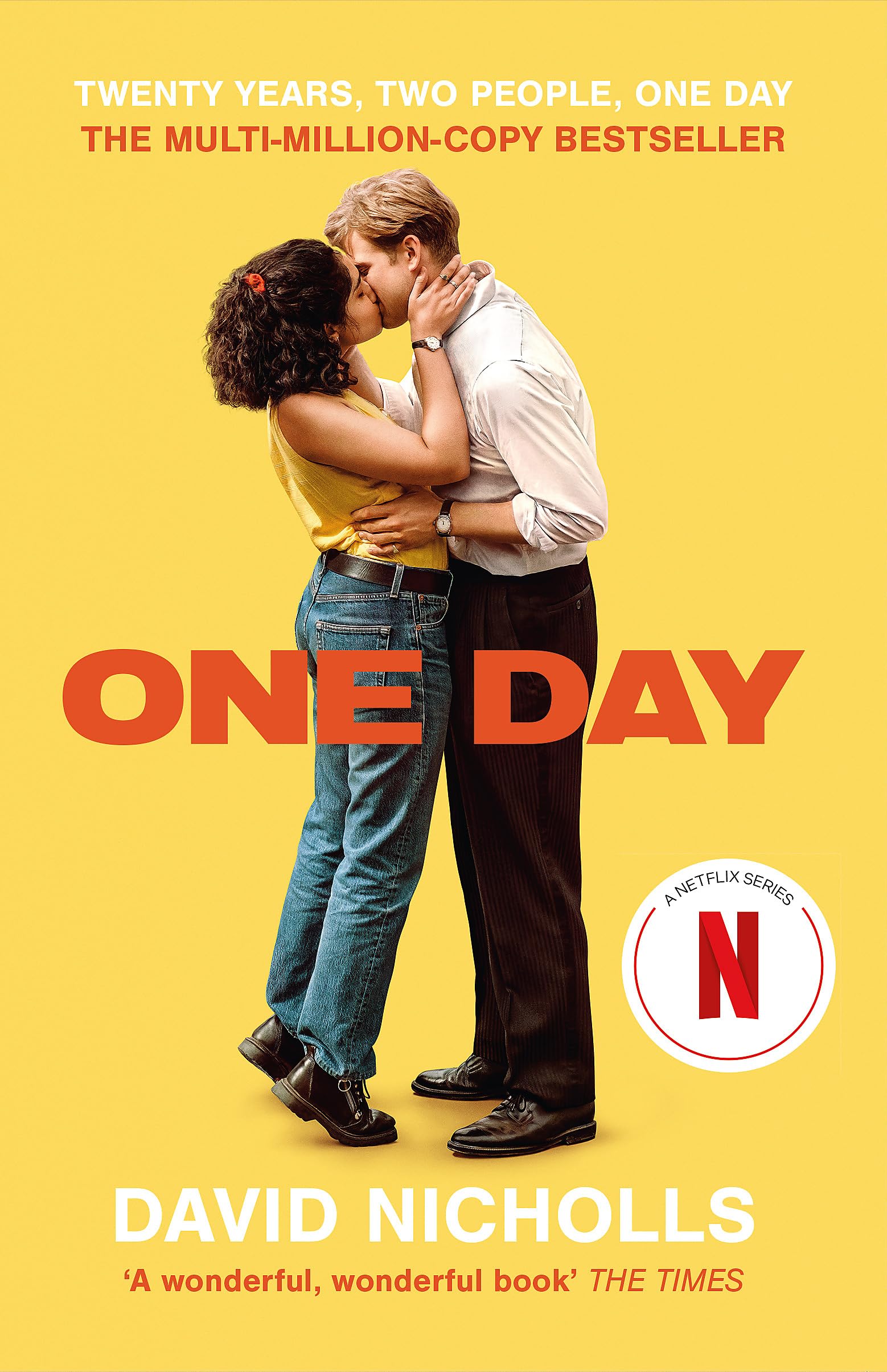
One Day by David Nicholls is a novel that follows Emma Morley and Dexter Mayhew over the course of twenty years, revisiting their lives on the same date—July 15th—each year. This narrative choice turns time into a silent but powerful presence, shaping their relationship as life slowly pulls them in different directions. What unfolds is not a conventional love story, but a meditation on timing, growth, and the quiet weight of everyday choices.
Emma is idealistic, sharp, and deeply aware of social injustice. She wants her life to mean something, even when reality feels misaligned with her ambitions. Dexter, by contrast, moves through the world with ease and privilege, buoyed by charm, success, and the assumption that things will somehow work themselves out. Their connection is immediate, but fragile—held together less by certainty than by possibility. They circle each other for years, sometimes close, sometimes impossibly far apart, shaped as much by who they are becoming as by what they feel. Nicholls excels at portraying adulthood in all its unglamorous truth: careers that disappoint, friendships that shift, confidence that fades, and dreams that quietly change shape. The annual snapshots allow us to witness these transformations in a way that feels both intimate and unsettling. We see how small decisions accumulate, how misunderstandings linger, and how emotional honesty is often delayed—not out of malice, but out of fear, immaturity, or simple distraction.
What makes One Day particularly affecting is its refusal to romanticize love. The relationship between Emma and Dexter is imperfect, sometimes frustrating, often tender. It is defined by missed opportunities and unsaid words, by moments that almost happen and then slip away. And yet, there is something deeply human in this imperfection. The novel suggests that love is not always about grand gestures, but about presence—and about the cost of not being fully there when it matters most.
On a personal level, this book lingered with me long after I finished it. Not because of a single dramatic moment, but because of the way it mirrors real life. It made me think about how often we assume there will be time later—to speak more honestly, to show up more fully, to say what we feel when it still matters. Emma and Dexter don’t fail because they don’t care enough; they fail because they grow at different rhythms, because clarity arrives later than courage.
The structure of the novel reinforces this idea beautifully. Returning to the same date each year highlights how even the most ordinary days can carry enormous meaning, even if we don’t recognize it at the time. It made me reflect on my own life, on how many moments may have felt insignificant while they were happening, only to reveal themselves later as turning points.
Despite its sadness, One Day is not a cynical novel. It doesn’t suggest that life is cruel for the sake of it; rather, it shows how fragile connection can be when we hesitate too long or take people for granted. By the end, the story feels less about loss and more about awareness. Not everything has to last forever to matter deeply. Some relationships shape us precisely because of their impermanence.
Closing the book left me with a quiet but persistent thought: to be more present, to hesitate less, and to recognize the importance of moments while they are still unfolding—before they turn into memories.