AI Driving Car
An AI-powered coaching framework for learner drivers in automotive industry, combining Reinforcement Learning and advanced planning algorithms to guide, correct, and accelerate skill acquisition, with the goal of optimizing high-performance driving on racetracks (Monza circuit FormulaUno as Use Case).
Master’s Thesis in Computer Science Engineering - Artificial Intelligence and Machine Learning (Politecnico di Milano — Graduation with Honours, October 2021).
Teaching a Learner Driver Using Reinforcement Learning and Planning Strategies
For my master’s thesis in Artificial Intelligence at Politecnico di Milano, I explored how an AI agent can learn to drive like a human—and even improve faster—with the help of a virtual teacher. The project focused on simulating how a beginner driver (the “student”) could be guided by a more experienced agent (the “teacher”), using a smart learning process inspired by how people learn complex skills.
Driving a sports car at high speeds, especially on a racetrack like Monza, requires precise timing, instinct, and experience. Instead of relying only on trial-and-error, I developed a system where a teacher can provide advice and corrections to a learning driver. This approach makes the learning process not just faster, but smarter.
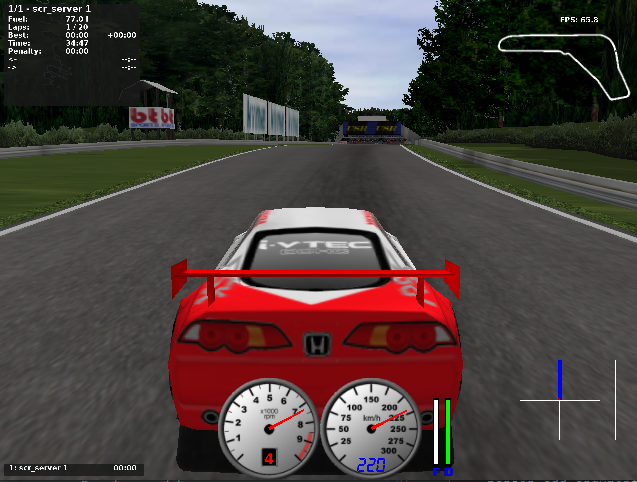
I used a racing simulator (TORCS) to test this concept, where the AI learns both by analyzing past mistakes (offline) and through real-time guidance (online). I also explored how planning strategies can help the teacher suggest better driving paths—like when to brake, turn, or accelerate—to complete a lap in the shortest possible time.
This project combined elements of machine learning, planning, and driving dynamics, with a goal that goes beyond racing: building smarter systems that can teach, support, and adapt—whether in self-driving cars, simulations, or real-life applications.
More details can be read in the full thesis: (VALERIANI, 2020). The thesis was carried out under the supervision of Assistant Professor Marcello Restelli and Researcher Alessandro Lavelli.
Technologies & Tools
- Reinforcement Learning (Policy Gradients, PGPE)
- Planning Algorithms (MCTS with multi-step loss)
- Simulation: TORCS
- Neural Networks, Transfer Learning, Python